Meaning: formed-earth. The earth beneath our feet.
The earth is the source of food, and the destination for the bodies of those who die. It came to be seen as a kind of womb, associated with the woman who mysteriously bear children. Those who died were arranged in the fetal position, their arms wrapped tightly around their legs. So when they were placed in the earth, the community felt as if they were a babe returning to the womb of a mother.
Symbol for Deghóm:
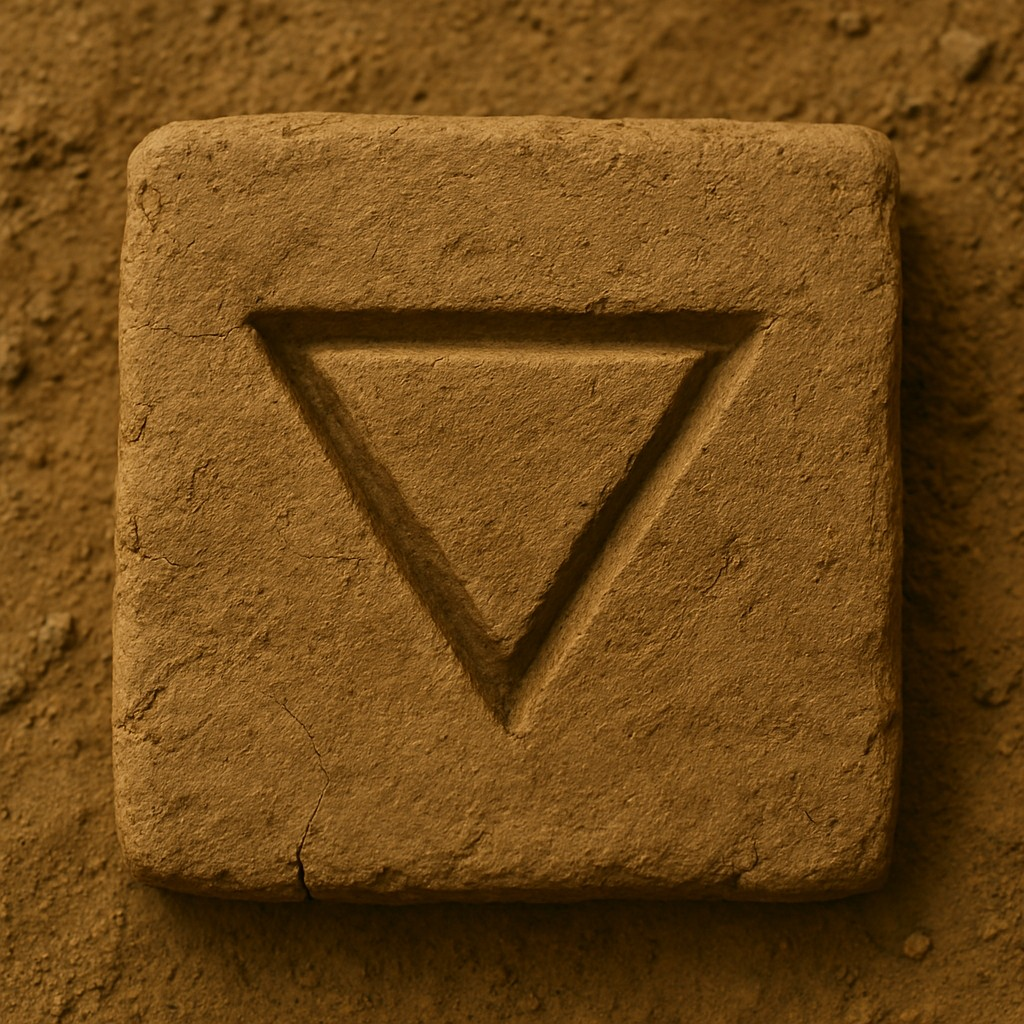
The character Deghóm
Date of birth: around 6500 BC
Parents: Pérha (milk-mother)
Deghóm is the protagonist of In the Day of the Flood.
A thoughtful young woman, born in strange circumstances and shaped by village life and her role as a priestess. An orphan originally marked for sacrifice but adopted by a loving milk-mother, she has a fierce sense of compassion.
Deghóm first appears in the Four Lights cycle as a young sky‑priestess in the village of Dókhali, remembered for the cave‑songs she offered to Déya, the bright sky-father, near the river Nistra in Eastern Europe. Her voice carries fragments of ritual practice, ancestral cosmology, and the mythic atmosphere of the real world 8500 years ago.
Deghóm agreed to be interviewed by Stephen Thomas, the author of In the Day of the Flood. The interview is here.